Control Stations: A Strategic Commitment to Safety and Continuity
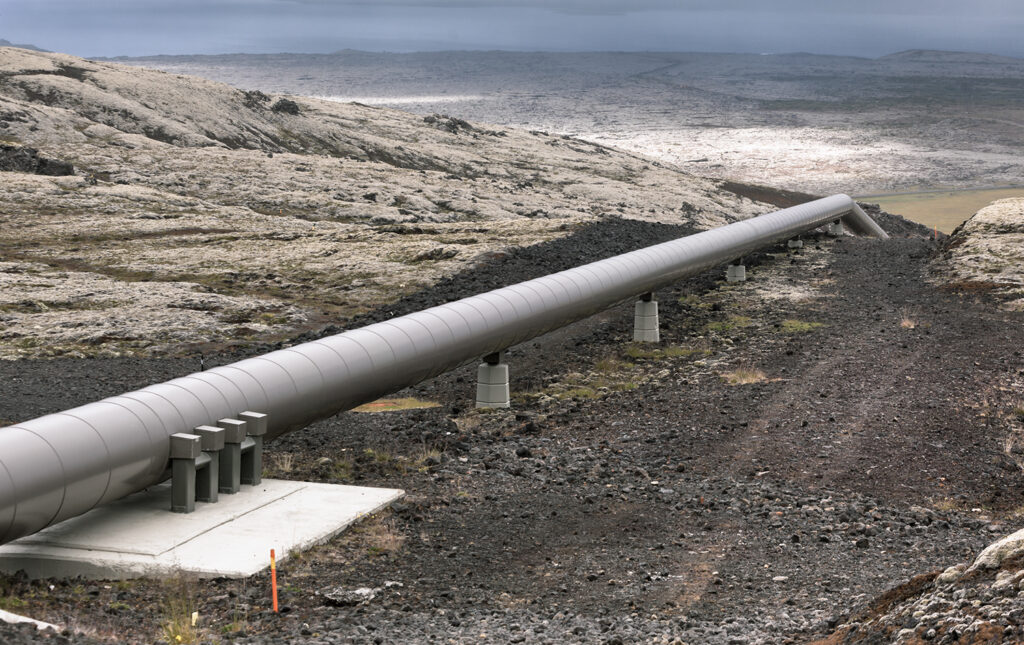
Maintenance as a Strategy, Not an Obligation In the energy sector, maintenance is often perceived as a cost. In reality, it is one of the most powerful investments in safety, reliability, and efficiency that an operation can make. Throughout my professional experience overseeing preventive maintenance planning for the gas control stations along the Ule–Amuay gas pipeline, I’ve learned that every inspection, calibration, and pressure test tells a story of foresight — of accidents prevented and continuity ensured. This system, stretching from Zulia to Falcón, is composed of a network of valves, actuators, and automated control systems that regulate the flow of natural gas between production and refining hubs. These components, though often invisible to the public eye, are the guardians of national energy integrity. Understanding the System: The Pulse of the Pipeline The Ule–Amuay gas pipeline forms part of Venezuela’s critical natural gas distribution infrastructure. Its control stations, strategically distributed along the route, are designed to: Each control station acts as a checkpoint of integrity. Within them, actuators, pressure transmitters, block valves, and bypass systems interact under automated and manual control logic. If one fails, the entire system can be compromised — hence the vital role of preventive maintenance. Why Preventive Maintenance Is Non-Negotiable Preventive maintenance is not about replacing parts; it’s about preserving operational certainty. In high-pressure systems, the difference between prevention and reaction can be measured in seconds — and in millions of dollars. Failure to execute systematic maintenance can lead to: On the other hand, a well-designed preventive maintenance plan achieves: When integrated into a robust safety management system, preventive maintenance becomes the first and most effective barrier against disaster. Operational Challenges and Engineering Discipline Implementing a preventive maintenance plan along a pipeline like Ule–Amuay is no simple task. It involves coordinating multidisciplinary teams, logistics across remote areas, and aligning technical priorities with production schedules. The main challenges include: These challenges demand not only technical skill but also engineering leadership — the ability to anticipate operational risks, adapt methodologies, and maintain cross-disciplinary coordination without compromising safety. Risks of Neglect: When Maintenance Fails, Everything Fails History has provided painful lessons. Globally, incidents such as the Carlsbad pipeline explosion in New Mexico (2000), which killed 12 people due to undetected corrosion, and the Guárico gas leak in Venezuela (2016), both highlight what can happen when preventive maintenance systems are not rigorously applied. In pipelines, neglect translates directly into: Preventive maintenance is the only engineering tool that turns those potential disasters into avoided footnotes. Leadership Through Safety: A Culture of Prevention In managing maintenance planning for gas control stations, I’ve seen how technical precision and human discipline must coexist. It is not enough to inspect equipment — we must also ensure that the people behind every wrench, gauge, and report understand the “why” behind each protocol. Safety leadership means transforming compliance into conviction. It is about instilling in every technician the understanding that maintenance is not paperwork — it’s protection. For engineers in this field, the greatest achievement is not installing a new system or completing a shutdown on time; it’s seeing months of flawless operation knowing that safety was engineered into every decision. Prevention Is the True Measure of Professionalism The Ule–Amuay gas pipeline is more than a conduit of energy; it is a reflection of national resilience and technical heritage. Every well-maintained actuator, every calibrated valve, and every inspection record represents one more day of safety, reliability, and progress. Preventive maintenance is not glamorous — it rarely makes headlines. But it is the quiet discipline that keeps nations running, industries alive, and communities safe. As engineers, our commitment must go beyond operation. It must extend to preservation — of systems, of people, and of the trust that society places in our work
Safety Management in Energy Operations: When Quality Becomes the Shield Against Disaster
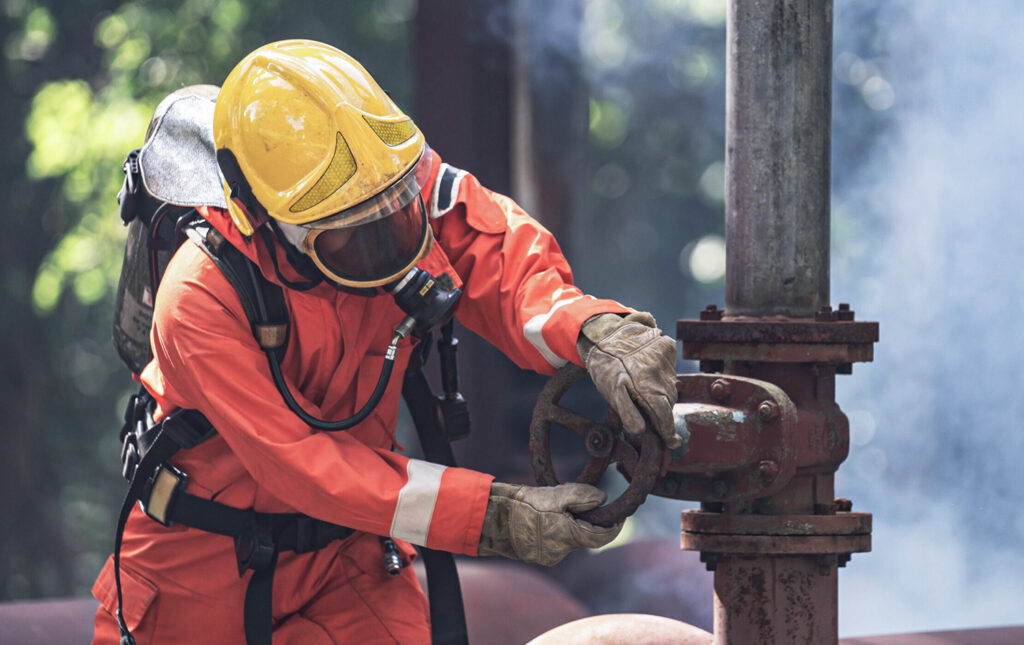
Introduction: Safety Is Not a Department, It’s a Discipline In oil and gas operations, safety is not an accessory—it is the structure that holds the entire system together.Too often, companies treat safety as a checklist or a regulatory requirement. Yet, history has shown us that when safety culture fails, the consequences reach far beyond financial losses: they destroy ecosystems, reputations, and lives. From the fires of Vaca Muerta (Argentina, 2019), to the crude spill near Midland, Texas (2023), to the tragic environmental contamination in Falcón, Venezuela (2022)—each event shares a common denominator: a breach in safety management tied to quality control failures. These incidents remind us that safety is not a cost—it is an investment in sustainability, reputation, and human integrity. 1. The Cost of Complacency: Lessons Written in Oil and Fire The explosion at a well in Vaca Muerta stands as one of the most impactful examples of how a minor maintenance deviation can escalate into a multi-million-dollar catastrophe.The official investigation traced the cause to a third-party maintenance error involving an improperly installed heating cable on a wellhead—a small procedural oversight that led to a gas and crude leak lasting over three weeks. In Midland, a corroded flowline went undetected during inspection rounds due to poor data management and lack of predictive maintenance systems. The resulting spill contaminated several acres of ranchland and required months of remediation. Meanwhile, in Falcón, Venezuela, poor infrastructure and low-quality pipeline materials triggered a coastal spill that devastated local marine life and fishing communities. The lack of replacement programs, combined with the absence of pressure monitoring, turned an avoidable failure into a long-term ecological crisis. Each of these cases demonstrates one truth: when safety culture weakens, quality erodes—and when quality erodes, nature and society pay the price. 2. Quality Is the First Layer of Safety Engineering safety begins long before an incident—it starts with the quality of materials, processes, and decision-making.As professionals, we often speak about barriers: physical, procedural, and human. Yet, the first barrier is always quality. A flange made from a substandard alloy, a pressure sensor not calibrated to spec, or an unverified welding procedure can all be silent contributors to future disasters.Quality is not about compliance—it’s about consistency and accountability. High-quality engineering decisions are the backbone of every safe operation: Safety without quality is theater. Quality without accountability is illusion. 3. Operational Integrity: The Bridge Between Safety and Performance Operational safety is not achieved through slogans; it’s built through systems that integrate engineering, inspection, and human behavior.In my career across three energy cultures—Venezuela, Argentina, and the United States—I’ve seen both extremes: hyper-regulated operations with complacent execution, and under-resourced teams with exceptional discipline. The differentiator has always been the strength of their safety culture. When teams understand that “safety” is a continuous process of verification, not an act of compliance, failures become predictable—and therefore, preventable. For instance, during my involvement in risk audits of high-pressure gas facilities, we implemented a cross-verification system between QA/QC and Safety Management, requiring sign-offs from both teams before pressurization.The result: a measurable 40% reduction in non-conformity incidents during start-up operations. The lesson is clear: safety systems must not operate in isolation—they must be embedded in every stage of engineering and execution. 4. The Deepwater Horizon Legacy: When Systems Collapse The 2010 Deepwater Horizon disaster remains the most profound reminder of what happens when cost and speed overtake prudence and quality.Despite having multiple safety systems, including blowout preventers and redundancy layers, human complacency, poor communication, and flawed testing aligned to create one of the most devastating industrial accidents in history. Eleven lives were lost, the Gulf of Mexico was polluted for months, and BP faced more than US$65 billion in damages and penalties.Every engineer should revisit this event—not as a case study of failure, but as a moral compass reminding us that no deadline or cost-saving measure justifies risking integrity. Deepwater taught us that even the most advanced systems are only as strong as the discipline of those who operate them. 5. Environmental Stewardship: Safety as a Promise to the Planet Oil and gas operations exist in delicate balance with the environment. Every decision we make—material selection, pipeline routing, maintenance frequency—carries ecological consequences. Environmental responsibility is not a trend; it is a technical and ethical obligation.Implementing real-time monitoring systems, corrosion sensors, leak detection algorithms, and emergency response training can drastically reduce environmental risks. Modern safety management must evolve toward sustainability-driven engineering, where the same precision that protects lives also protects ecosystems.When we protect nature, we protect the future of our own industry. 6. Leadership and Accountability: The Human Element of Safety In every incident I’ve studied, from Vaca Muerta to Deepwater, a common thread emerges: someone saw the warning signs but failed to act.That’s not a technical issue—it’s a leadership issue. Safety management requires moral courage. Leaders must foster environments where technicians feel empowered to report anomalies, even when production goals are at stake.Because silence in engineering can be lethal. A true leader in safety doesn’t just enforce rules; they cultivate trust, discipline, and ownership across the organization. Safety Is Not a Game The energy sector operates at the intersection of complexity, pressure, and consequence.Every bolt we tighten, every weld we approve, every inspection we sign off carries the weight of responsibility—not only to our employers, but to our planet and future generations. Safety is not a slogan. It is not a metric. It is a way of thinking, a way of leading, and a way of respecting life itself. The next time someone questions the cost of safety or the time it takes to do things right, remember:Quality and safety don’t cost—they prevent the cost of tragedy.